Notice: Function wp_register_script was called incorrectly. Unrecognized key(s) in the $args param: defer. Supported keys: strategy, in_footer, fetchpriority, module_dependencies Please see Debugging in WordPress for more information. (This message was added in version 7.0.0.) in /home/julie/public_html/wp-includes/functions.php on line 6170

Notice: Function wp_register_script was called incorrectly. Unrecognized key(s) in the $args param: defer. Supported keys: strategy, in_footer, fetchpriority, module_dependencies Please see Debugging in WordPress for more information. (This message was added in version 7.0.0.) in /home/julie/public_html/wp-includes/functions.php on line 6170
Sex differences – Canada Brain Power

Tag: Sex differences

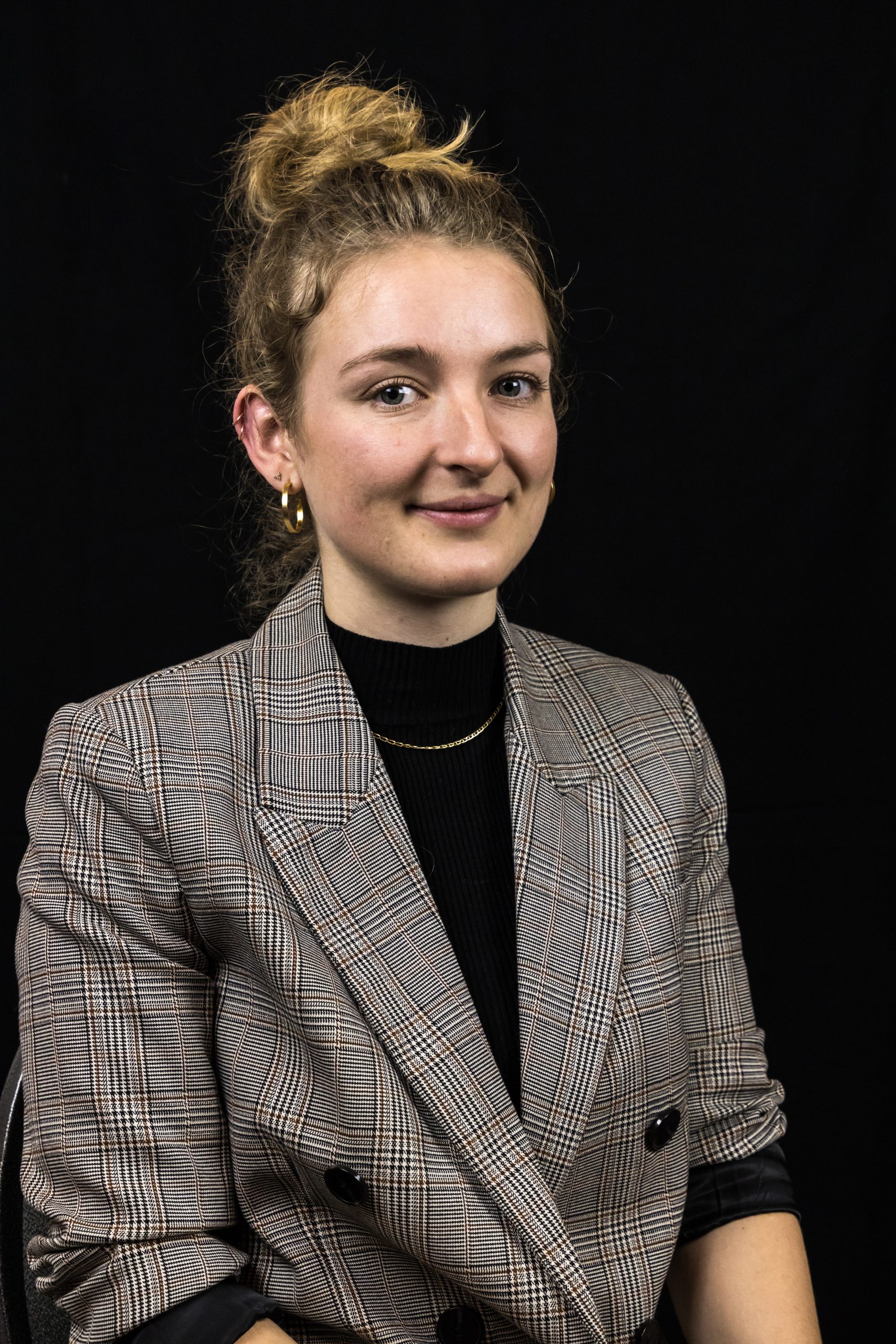
  • Major Depressive Disorder (MDD) is more frequent in women than men, and sex differences have been reported in symptoms and treatment response. The fact that individuals with cardiovascular disease or stroke are more prone to depression suggests vascular dysfunction may also be involved. New research by Laurence Dion-Albert, PhD student at Université Laval, shows for the first-time alterations in brain barrier integrity in female animals and women with depression that are different from those seen in males and men. They also identified potential biomarkers for depression that could help better diagnose and inform treatment strategies for depressive disorders.

    Laurence Dion-Albert won a CAN-CIHR-INMHA Brain Star award for these discoveries.

    Exposure to chronic stress induces changes in brain vascular integrity  and blood-brain barrier (BBB) leakiness through downregulation of a protein called Claudin-5 in the nucleus accumbens of male mice, a brain region critical for emotional responses. During her Masters degree, Laurence Dion-Albert investigated if sex-specific changes in BBB integrity could underlie sex differences in major depressive disorder. She found that female mice exposed to chronic stress presented major changes in expression of BBB-related genes and loss of Claudin-5 in a different brain region, the prefrontal cortex (PFC), a hub for anxiety and self-perception. Importantly, viral-mediated knockdown of Claudin-5 in the female PFC recapitulated social isolation as well as anxiety- and depressive-like behaviors without prior exposure to stress, highlighting a causal role for Claudin-5 in the establishment of detrimental stress coping behaviors. These findings were confirmed in post-mortem brain samples from depressed individuals of both sexes, adding critical translational value to the findings in animals. Finally, Laurence Dion-Albert explored several markers of vascular dysfunction in blood samples from stressed animals and individuals with MDD. She showed that sE-selectin, an indicator of vascular inflammation, is higher in stressed females and women with MDD, and could serve as a biomarker to assist in diagnosis.

    These results, which demonstrate sex-specific neurovascular alterations linked to depression for the first time, may explain sex-specific symptomatology and pave the way for the development of new, more effective treatments. 30-50% of individuals with MDD are unresponsive to traditional neuron-centered antidepressants, and a better understanding of the mechanisms involved in stress responses and mood disorders is essential to achieve breakthrough for them. Moreover, no reliable biomarker has been found for major depression, which is still diagnosed by questionnaires. Although it needs to be evaluated in larger cohorts, this study is the first to propose sE-selectin as a blood marker for MDD.

    Following these findings, Laurence Dion-Albert hopes to further decipher the mechanisms underlying the pathogenesis of MDD to produce tangible change for men and women with MDD across the world.

    About Laurence Dion-Albert

    Laurence Dion-Albert developed the experimental design with her supervisor, Dr. Caroline Menard, researcher at the CERVO Brain Research Centre, affiliated to Université Laval. She organized, optimized, and performed all the experiments included in the article. She also supervised colleagues who helped for surgeries and behavior analysis and helped write the manuscript and prepare figures. Beyond her direct contribution to the study, Laurence Dion-Albert has been actively involved in sharing these results with other scientists and the public through multiple presentations.

    Funding Source:

    Canadian Institutes of Health Research

    Scientific publication :

    Dion-Albert, L., Cadoret, A., Doney, E. Neutzling Kaufmann, F., Dudek, KA., Daigle, B., Parise, LF., Cathomas, F., Samba, N., Hudson, N., Lebel, M., Signature Consortium., Campbell, M., Turecki, G., Mechawar, N., Menard, C. Vascular and blood-brain barrier-related changes underlie stress responses and resilience in female mice and depression in human tissue. Nat Commun 13, 164 (2022). https://doi.org/10.1038/s41467-021-27604-x

    https://www.nature.com/articles/s41467-021-27604-x

    More about this story

    This discovery was selected as one of the top 10 discoveries of 2022 by Quebec Science magazine:

    https://www.quebecscience.qc.ca/sciences/les-10-decouvertes-de-2022/depression-maladie-differente-sexe/

    https://lactualite.com/sante-et-science/depression-une-nouvelle-piste-pour-mieux-traiter-les-femmes/

    https://www.journaldemontreal.com/2022/01/10/decouverte-scientifique-a-luniversite-laval-la-depression-affecte-differemment-les-sexes

    https://ici.radio-canada.ca/nouvelle/1853141/depression-majeure-difference-hommes-femmes-decouverte-equipe-scientifiques-universite-laval-cerveau-biomarqueur


  • Female chronic pain patients far outnumber males; however, most of the foundational preclinical pain research has been conducted in male rodents only. This has resulted in two barriers to translating basic science findings into new effective clinical treatments: a fundamental lack of knowledge of female pain physiology, and possible species differences between the rodents used in basic science investigations and the human clinical pain population. By combining studies of behaviour in rodents and transmission of pain signals in spinal cord tissue from humans and rodents from both sexes, Annemarie Dedek has successfully bridged the gap between animal and human studies to explain sex differences in chronic pain development. She won a Brain Star award from the Canadian Association for Neuroscience and the Canadian Institutes of Health Research for this ground-breaking discovery.

    Annemarie Dedek reports three main findings in this publication:

    First, while male and female animals share similar responses to inflammatory pain, the neuronal mechanism underlying this pain differ by sex.

    Second, in male rats and humans, loss of inhibition of pain signals, which is associated with the development of chronic pain, depends on brain-derived neurotrophic factor (BDNF), which then affects NMDA receptors in pain-processing neurons of the spinal chord. In female rats and humans pain signalling is driven independently of BDNF and NMDA receptor alterations.

    Third, pain processing in female rats whose ovaries were removed before sexual maturity is similar to that seen in males, and dependent on BDNF and NMDA receptors. This indicates that sex differences are driven by sex hormones.
    In summary, these results describe sex specific mechanisms of development of pathological pain that is conserved across rats and humans. These findings are evidence of the importance of sex-inclusive basic science research and suggest that clinically effective pain therapies may target sex-specific drivers of pathological pain.

    About Dr. Annemarie Dedek

    Annemarie Dedek is passionate about helping the over 8 million Canadians living with Chronic pain. She completed this work during her PhD in the laboratories of Dr. Michael Hildebrand at Carleton University and Dr. Eve Tsai at the Ottawa Hospital Research Institute. Working on this project has forever changed her outlook on science. Since working on this project, she is now more cognizant of bias and inequity in research and in medicine. This important discovery has inspired her to work to improve equity in basic science.

    Funding Sources

    Mitacs, CIHR, NSERC, Eli Lilly, The International Association for the Study of Pain, The Canadian Pain Society

    Read more about this story

    https://www.eurekalert.org/news-releases/947138
    https://ottawacitizen.com/news/local-news/finding-of-sex-related-differences-in-pain-signalling-could-lead-to-better-treatment
    This paper has garnered widespread media interest, including on the cover of The Ottawa Citizen, in an interview on CBC radio and with global news outlets across Africa, Asia, Europe, and North America. This study ranked in the top 5% of studies ranked by altmetric, a measure of the publication’s impact in the media https://oxfordjournals.altmetric.com/details/125143422/news

    Scientific publication:
    Annemarie Dedek, Jian Xu, Louis-Étienne Lorenzo, Antoine G Godin, Chaya M Kandegedara, Geneviève Glavina, Jeffrey A Landrigan, Paul J Lombroso, Yves De Koninck, Eve C Tsai, Michael E Hildebrand, Sexual dimorphism in a neuronal mechanism of spinal hyperexcitability across rodent and human models of pathological pain, Brain, Volume 145, Issue 3, March 2022, Pages 1124–1138, https://doi.org/10.1093/brain/awab408

    https://academic.oup.com/brain/article/145/3/1124/6551129


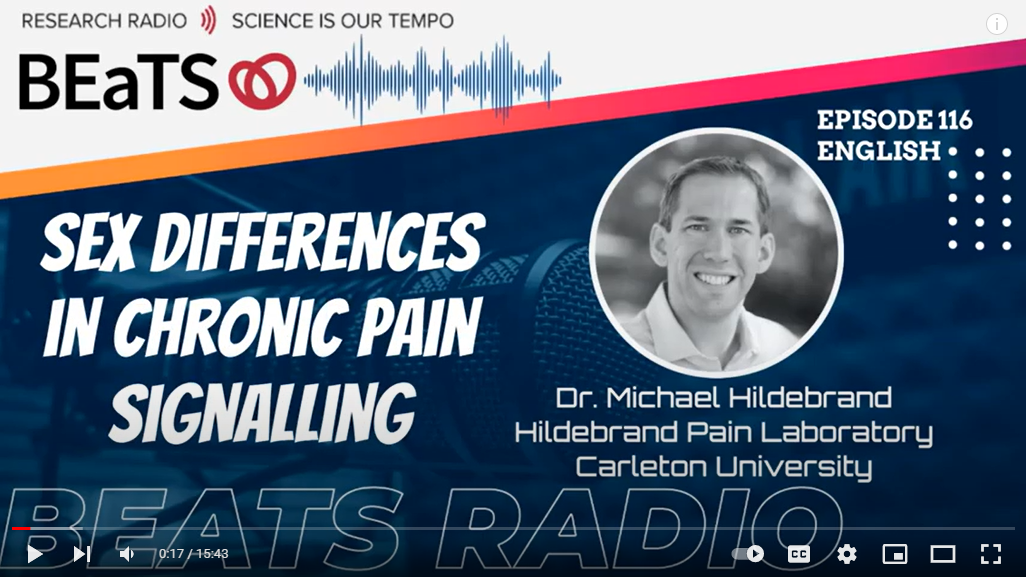
  • Episode 116 BEaTS Research Radio- Interview with Dr. Michael Hildebrand

    Nicole Chu from the University of Ottawa speaks with Dr. Mike Hildebrand, Associate Professor at Carleton University in the Department of Neuroscience and Affiliate Investigator at the Ottawa Hospital Research Institute. Tune in to learn more about their recent work published in the Journal Brain which demonstrates for the first time that spinal cord process pain signals differently in women compared to men.

    Learn more: https://hildebrandpainlab.com/

    Follow BEaTS Research Radio on youtube https://www.youtube.com/@BEaTSResearchRadio


  • In this episode of Brain Bytes we meet with Aarthi Gobinath, PhD. She was curious about what depression looks like in the female brain and how postpartum depression manifests itself. She hopes her work can tackle the issue of researchers commonly using only male test subjects in their studies. Links: Voluntary running influences the efficacy of fluoxetine in a model of postpartum depression. https://www.ncbi.nlm.nih.gov/pubmed/2… Follow Brain Bytes on Twitter! @UBCBrainBytes https://twitter.com/UBCBrainBytes Aarthi Gobinath on Twitter: @aarthigobinath https://twitter.com/aarthigobinath Michael Ruffolo on Twitter: @mike_ruffolo https://twitter.com/mike_ruffolo Brain Bytes is a science communication initiative by graduate students within the Neuroscience Program at the University of British Columbia, in collaboration with the Graduate School of Journalism.


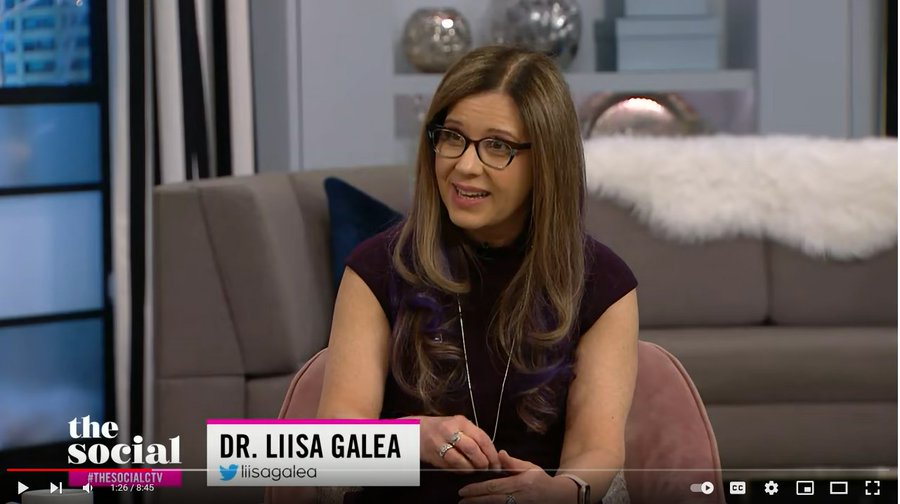
  • With 1 in 5 Canadians experience mental illness, Dr. Liisa Galea explores how women are disproportionately affected, and how we can help.

    Co-hosted by Melissa Grelo, Cynthia Loyst, Lainey Lui and correspondent Jess Allen, THE SOCIAL, airing on CTV, brings a fresh, daily perspective on the up-to-the-minute news, pop culture, and lifestyle topics that matter most to Canadians.