Tag: Learning

  • A region of the brain called the primary motor cortex (M1) is a critical site for learning motor skills (such as riding a bicycle). Moreover, reward is known to accelerate and enhance motor learning, however, it is not understood how reward exerts these effects. While reward has previously been shown to activate neurons in M1 of primates, the cell-types exhibiting this activity were unknown. Candice Lee, a PhD student at the University of Ottawa led a study using live brain imaging techniques in mice while they were learning a task and demonstrated that different cell-types do indeed have distinct responses to reward and reward-predicting cues and these responses evolve differentially with learning.

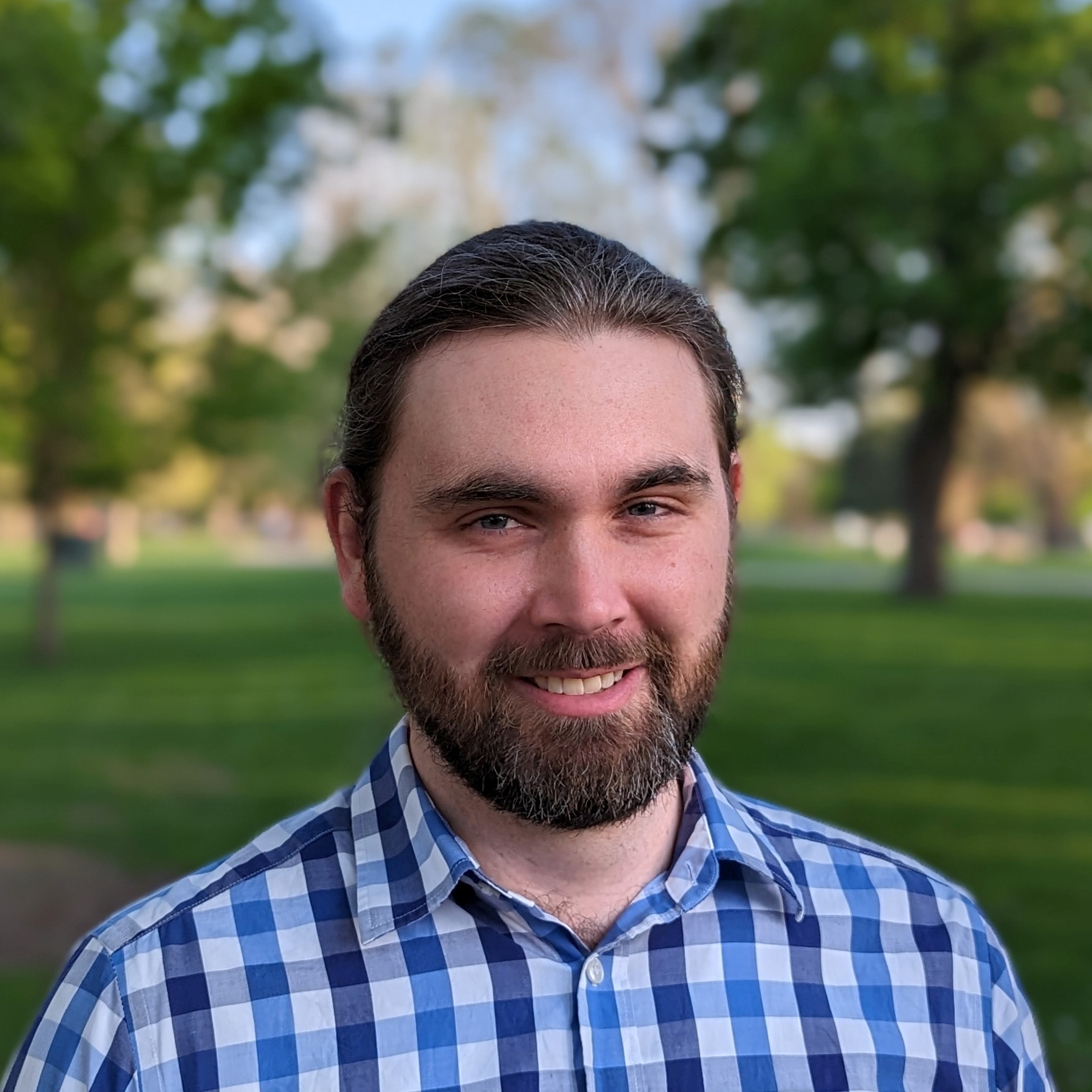
    Candice Lee, who was at the time of this work a PhD student at the University of Ottawa, won a CAN-CIHR-INMHA Brain Star award for these discoveries.

    In this experiment, a specific sound cue was linked to a reward, and researcher knew the mice had learned the association when they observed anticipatory licking for the reward when the sound was heard. This allowed the researchers to use a live imaging technique, called in vivo two-photon calcium imaging, to investigate which specific neuron types were activated during this classical conditioning task. They demonstrated that excitatory neurons and the inhibitory GABAergic interneuron subtypes, PV-, SST- and VIP-expressing interneurons all have distinct responses to both reward and reward-related cues. Moreover, different neuronal cell-types underwent differential changes as the animal progressed through reward-based associative learning. While excitatory neurons were initially responsive to reward, reward responses were reduced after associative learning occurred. Remarkably, PV-interneurons were preferentially responsive to reward-related cues rather than the reward itself, and became more responsive with associative learning, suggesting that PV-interneurons could have a specialized role in preparatory activity during reward-expectation. In contrast, VIP-interneurons, which specialize in inhibiting other inhibitory interneurons and are thereby disinhibitory, were preferentially responsive to reward itself and became more responsive to reward with learning. Changes in PV- and VIP-interneuron activity were not seen in the absence of reward or if reward was given randomly, denoting specificity to associative learning. Together, these findings demonstrate that reward is faithfully represented within M1, despite being outside of canonical reward-processing regions. This suggests that during reward-based associative learning, VIP-interneurons act as a gate, whereby reward activates VIP-interneurons to disinhibit pyramidal neurons and enable plastic changes.

    This publication connects and expands on multiple findings within the fields of reward processing and motor learning. Since the activation of different cell-types exert opposing and precise effects on local circuitry, elucidating cell-type specific activity is a critical step in understanding how reward affects motor cortex activity. There is hope that mechanisms discovered in this study can be leveraged to enhance motor learning following the loss of motor skills such as after stroke or traumatic brain injury, potentially through VIP-interneuron targeted therapies.

    About Candice Lee

    Dr. Candice Lee joined Dr. Simon Chen’s lab as a doctoral student and was the first member of the newly minted lab. During this time, she established two-photon calcium imaging, and imaged the activity of hundreds of cells in the brains of behaving animals, as described in this study. Candice and Dr. Chen conceived the project. Candice performed the experiments and data analysis, with the exception of figure 3, which was contributed by collaborators from Dr. Richard Naud’s lab. She also took the lead on writing the manuscript with Dr. Chen. Candice completed her PhD in 2022 and is now a postdoctoral fellow at the University of Oxford in the UK.

    Sources of funding

    This work was supported by grants for Dr. Simon Chen from Canada Research Chair (CRC) (grant no. 950-231274) and Natural Sciences and Engineering Research Council of Canada (NSERC) (grant no. 05308), and a grant for Dr. Richard Naud from NSERC (grant no. 06972). Emerson Harkin was supported by a NSERC graduate scholarship. Candice Lee was supported by Ontario Graduate Scholarship and Queen Elizabeth II Graduate Scholarship.

    Original research article

    Candice Lee, Emerson F Harkin, Xuming Yin, Richard Naud, Simon Chen, (2022). Cell-type-specific responses to associative learning in the primary motor cortex. eLife 11:e72549.

    https://doi.org/10.7554/eLife.72549


  • Human memory can be divided into long and short-term according to the time information can remain stored and have been associated to different brain regions. The hippocampus (HPC) has been associated with the formation of long-term memories stored as changes in the strength of synapses that can last decades. On the other hand, the Lateral Prefrontal Cortex (LPFC) has been associated with short-term memory, like being able to shortly remember a phone number, which is temporarily stored for a matter of seconds. Benjamin Corrigan, PhD student at the University of Western Ontario, identified distinct neural codes, or patterns of neuron firing, in the two brain regions by recording brain activity in primates performing learning tasks in virtual reality settings. These distinct neural codes elucidate some differences in how the neurons in these regions communicate, and how these methods of communication can facilitate the type of memory that each region is involved in. This knowledge can help guide research into memory formation and treatments for diseases like Alzheimer’s, where memory is impaired.

    Benjamin Corrigan was awarded a Brain Star award by CIHR’s Institute of Neuroscience, Mental Health and Addiction and the Canadian Association for Neuroscience for these discoveries.

    In this study, the researchers recorded the responses of neurons in both brain areas (hippocampus and lateral frontal cortex) during different tasks that require long and short term memory. They found that the hippocampus and the prefrontal cortex use different neural codes to represent similar information. Hippocampal neurons fire action potentials in bursts, which can trigger changes in the strength of connections between neurons (synapses) during the formation of long-term memories. On the other hand, lateral prefrontal cortex neurons fire action potentials more sparsely, avoiding the strengthening of synapses but allowing longer trains of action potentials that temporarily encode memories.

    While the propensity for bursting of the hippocampus was well known, little had been done to look at the information available in the bursts. Discovering that there was similar information available between the burst code and spike code for the hippocampus could be an important step towards understanding how memories are formed. While there are informative spikes outside of bursts, further research determining whether these bursts are critical to the formation of memory is an exciting new research path.

    The hippocampus and the prefrontal cortex are both regions that receive highly processed information and are also regions that are affected by neurodevelopmental and neurodegenerative diseases. This paper elucidates some differences in how the neurons in these regions communicate, and how the method of communication, bursting or sparse firing, can facilitate the type of memory that each region is involved in. This knowledge can help guide research into memory formation and treatments for diseases where memory is disrupted.

    About Benjamin Corrigan

    Benjamin Corrigan performed this study as a PhD student in the laboratory of Dr. Julio Martinez-Trujillo at the University of Western Ontario. He performed most experiments, developed approaches to analyze the data, wrote the code for the analyses, and the first draft of the manuscript, and along with his supervisor addressed reviews and edits from fellow authors.

    Funding sources

    CIHR, NSERC, OGS, BrainSCAN and NeuroNex (National Science Foundation).

    Scientific publication

    Corrigan, B. W., Gulli, R. A., Doucet, G., Roussy, M., Luna, R., Pradeepan, K. S., Sachs, A.J., Martinez-Trujillo, J. C. (2022). Distinct neural codes in primate hippocampus and lateral prefrontal cortex during associative learning in virtual environments. Neuron, 110(13), 2155-2169.e4. https://doi.org/10.1016/j.neuron.2022.04.016

    https://www.sciencedirect.com/science/article/abs/pii/S0896627322003610